
The future of connected devices and smart technology is arriving faster than most of us realize. From smart thermostats that learn your schedule to fitness trackers that share data with your doctor, these tools are already reshaping how we live, work, and stay healthy — and the next wave promises even bigger changes.
In this article, we break down what’s coming next in plain language. You’ll learn which trends actually matter, how to prepare your home and routine, and simple steps to stay secure and in control as the world gets more connected.
Introduction
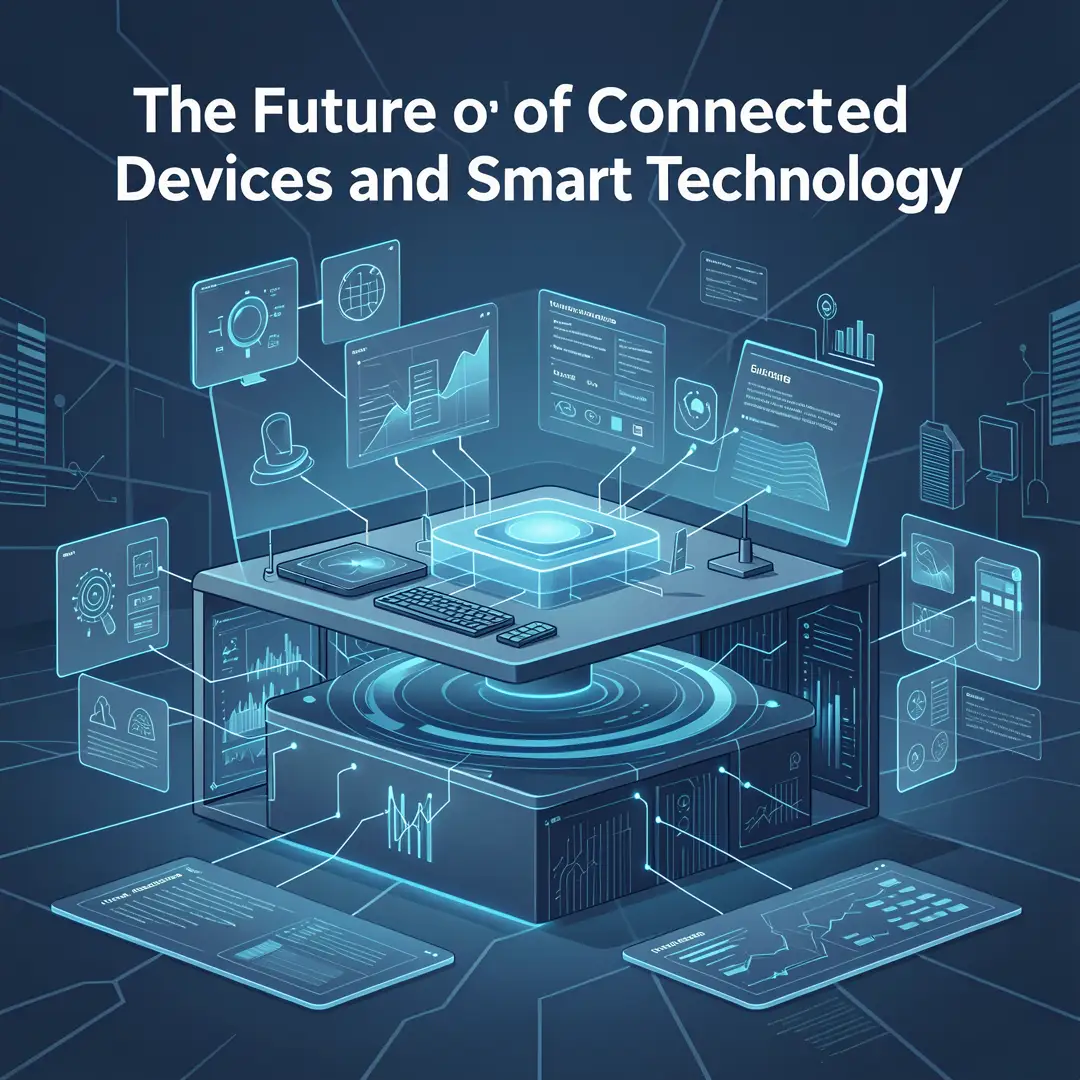
The future of connected devices and smart technology is no longer a distant concept confined to science fiction or research labs. It is unfolding in real time, reshaping how we live, work, and interact with the world around us. From smart thermostats that learn your daily routine to wearable health monitors that flag potential issues before they become serious, connected devices have quietly woven themselves into the fabric of everyday life. As networks grow faster and sensors become more affordable, the next wave of smart technology promises to be even more integrated, intelligent, and invisible.
This article explores the future of connected devices and smart technology with clear, practical guidance. Whether you are a homeowner considering your first smart home setup, a professional navigating the Internet of Things (IoT) in your industry, or simply someone curious about where all this is heading, understanding the fundamentals helps you make informed decisions. The pace of change can feel overwhelming, but it does not have to be. By focusing on core principles and consistent habits, you can engage with smart technology confidently rather than reactively.
The stakes are real. Connected devices now influence everything from energy consumption to personal security to healthcare outcomes. Making sense of them is no longer optional for those who want to remain capable and secure in a rapidly digitizing world. Reliable information and consistent habits lead to better long-term outcomes, and that principle applies whether you are managing a single smart speaker or an entire industrial sensor network.
Key Concepts
Before diving into the future, it helps to anchor yourself in a few fundamental ideas. These concepts form the vocabulary and mental model you will need to evaluate any connected device or smart system you encounter.
The Internet of Things (IoT) refers to the vast network of physical objects embedded with sensors, software, and connectivity that allows them to collect and exchange data. Your smartwatch, your car’s tire pressure sensors, and the inventory trackers in a warehouse are all part of the IoT. The defining feature is not just connectivity but the ability to generate and act on data.
Edge computing is the practice of processing data near the source—on the device itself or at a local gateway—rather than sending everything to a distant cloud server. This reduces latency, saves bandwidth, and improves privacy. For example, a smart camera that recognizes a familiar face locally does not need to upload every frame to the cloud. As devices proliferate, edge computing becomes essential to keep systems responsive and efficient.
Interoperability describes how well different devices and platforms work together. The smart home market has historically been fragmented, with competing standards like Zigbee, Z-Wave, Wi-Fi, and Bluetooth. Newer initiatives such as Matter aim to unify these under a single application layer, allowing a light bulb from one brand to work seamlessly with a hub from another. Interoperability is the difference between a collection of gadgets and a truly integrated system.
Artificial intelligence (AI) and machine learning are what turn raw data into useful action. A connected device without intelligence is just a remote-controlled appliance. With AI, it can predict, personalize, and automate. Smart thermostats learn your schedule; smart speakers understand natural language; smart security systems distinguish between a passing cat and a prowler.
Security and privacy are not afterthoughts but foundational requirements. Every connected device is a potential entry point for malicious actors. Good smart technology design includes encryption, regular firmware updates, and clear data policies. As a user, your awareness of these issues is your first line of defense.
- Sensor fusion: Combining data from multiple sensors (motion, temperature, light) to create a more accurate picture of the environment.
- Digital twins: Virtual replicas of physical systems that update in real time, used for simulation and predictive maintenance.
- 5G and beyond: Faster, lower-latency networks that enable real-time control of devices in ways 4G could not.
- Energy harvesting: Technologies that let devices power themselves from ambient sources like light, vibration, or heat, reducing battery dependence.
Deep Dive
The future of connected devices is not just about more gadgets. It is about a shift in how systems are designed, how data flows, and how humans interact with technology. Several trends are converging to define the next decade.
First, ambient computing is emerging as the logical endpoint of the smart device revolution. Instead of pulling out a phone or speaking to a specific speaker, you will be surrounded by sensors and interfaces that respond to your presence, voice, and gestures without explicit commands. Your home will adjust lighting and temperature as you move through it. Your office will prepare your workspace as you approach. The technology recedes into the background, becoming part of the environment itself.
Second, healthcare is being transformed by connected devices. Wearables already track heart rate, sleep, and blood oxygen. Future devices will monitor chronic conditions continuously, alert caregivers to anomalies, and even administer medication automatically. Remote patient monitoring reduces hospital visits and enables early intervention. The line between consumer wellness gadgets and medical-grade devices is blurring, which raises important questions about regulation, data accuracy, and who owns your health data.
Third, smart cities and infrastructure are moving from pilot projects to mainstream deployment. Connected traffic lights optimize flow in real time. Smart grids balance energy supply and demand, integrating renewable sources. Waste management systems signal when bins are full. These systems promise efficiency and sustainability, but they also require robust cybersecurity and thoughtful governance to prevent disruptions and protect citizen privacy.
Fourth, industrial IoT (IIoT) is driving the next industrial revolution. Factories use connected sensors to monitor machinery, predict failures before they happen, and optimize production lines. Digital twins allow engineers to simulate changes before applying them to physical systems. The result is less downtime, lower costs, and safer workplaces. The same principles apply in agriculture, logistics, and energy.
Fifth, the user experience is becoming more conversational and contextual. Voice assistants are improving, but the real shift is toward multimodal interaction—combining voice, touch, gesture, and even gaze. Your devices will understand not just what you said but where you are, what you are doing, and what you likely need next. This raises the bar for privacy and consent, because contextual awareness requires deep data collection.
Despite the promise, challenges remain. Fragmentation still plagues the consumer market. Power consumption limits how small and long-lasting devices can be. Security vulnerabilities are widespread, and many manufacturers prioritize speed to market over robust protection. Digital divide concerns arise when advanced smart technology is accessible only to affluent or urban populations. Addressing these challenges is as important as advancing the technology itself.
For individuals and organizations, the deep dive conclusion is this: the future of connected devices is not predetermined. It will be shaped by the choices of manufacturers, policymakers, and users. By understanding the underlying dynamics, you can make better decisions about what to adopt, what to avoid, and how to protect yourself.

Best Practices
Navigating the world of connected devices and smart technology requires more than just buying the latest gadget. These best practices apply whether you are setting up a smart home or managing an enterprise IoT deployment.
- Start with a clear purpose. Do not adopt technology for its own sake. Identify a specific problem you want to solve—energy savings, security, convenience, health tracking—and choose devices that address it directly.
- Prioritize interoperability. Before buying, check whether the device works with standards like Matter, Wi-Fi, or Bluetooth and whether it integrates with platforms you already use. Avoid locking yourself into a single vendor’s ecosystem unless you are comfortable with that trade-off.
- Update firmware regularly. Manufacturers release updates to patch security holes and add features. Enable automatic updates where possible, and check manually for devices that lack that option.
- Secure your network. Use a strong, unique password for your Wi-Fi. Consider a separate network for smart devices to limit exposure. Enable two-factor authentication on any associated accounts.
- Review privacy settings. Understand what data each device collects and how it is shared. Disable features you do not need. Read the privacy policy, even if it is long.
- Plan for power and connectivity. Battery life, Wi-Fi range, and backup power matter. A smart lock that fails during a power outage is more than an inconvenience.
- Document your setup. Keep a record of devices, passwords, and configurations. This simplifies troubleshooting and helps when you add or replace components.
- Think about end-of-life. When a manufacturer stops supporting a device, it may become a security risk. Have a plan for replacing or isolating legacy devices.
Consistency is key. Reliable information and consistent habits lead to better long-term outcomes. A smart home that is set up once and then ignored will degrade over time. Regular check-ins—monthly or quarterly—keep your system secure and functional.
Step-by-Step Guide to Adopting Smart Technology
The following steps provide a practical framework for anyone looking to integrate connected devices into their life or work. They are intentionally general so you can adapt them to your context.
Step 1: Understand the fundamentals
Before you buy anything, spend time learning the basic concepts covered earlier: IoT, edge computing, interoperability, AI, and security. Understand the difference between a hub and a bridge, between local control and cloud dependence, and between consumer and enterprise-grade devices. This knowledge will save you from expensive mistakes and help you ask the right questions.
Step 2: Assess your starting point
Take inventory of what you already have. What smart devices, if any, are in your home or organization? What network infrastructure exists? What are your current pain points—high energy bills, security concerns, inefficient workflows? A clear-eyed assessment prevents redundant purchases and highlights gaps. Write it down.
Step 3: Set clear goals
Define what success looks like. Is it reducing energy consumption by 15%? Getting alerts when someone enters your driveway? Automating a manual process? Goals should be specific, measurable, and tied to real needs. Without clear goals, you will end up with a collection of disconnected gadgets rather than a coherent system.
Step 4: Gather necessary resources
Identify the resources you need: budget, time, technical skills, and any professional help. Some.
You now have a solid foundation for The Future of Connected Devices and Smart Technology. Apply the best practices above and revisit this guide as your needs evolve.